

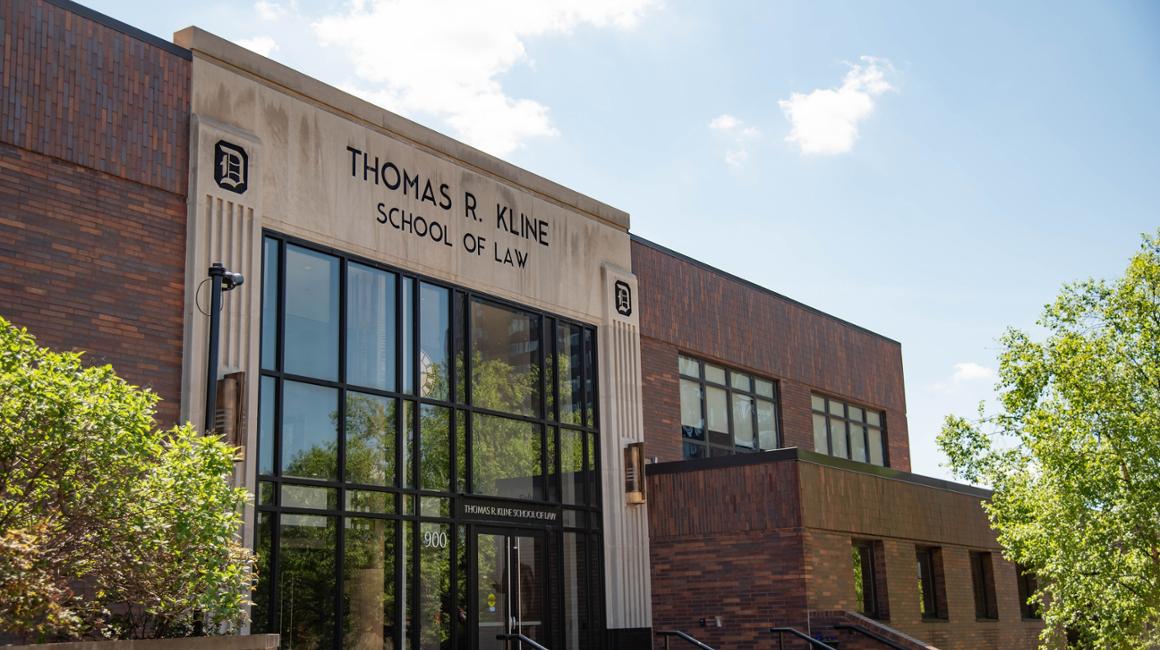
As Pennsylvania and other states prepare to transition to the new NextGen Uniform Bar Exam, the Thomas R. Kline School of Law of Duquesne University will host After the Exam: The Future of Legal Licensure and the NextGen Transition, a national symposium offering insights into new trends in lawyer licensure for lawyers and judges, and advice and solutions for educators.
Presented by the Duquesne Law Review of the Duquesne Kline School of Law, the free symposium will be held from 8:30 a.m. to 4:15 p.m. on Friday, Dec. 4 in the Power Center Ballroom. The event offers continuing legal education (CLE) and continuing judicial education (CJE) credits.
The two-day bar exam is the pinnacle test of a legal education, determining whether a person may become a practicing attorney. For years, the Uniform Bar Exam (UBE) has been the standard assessment in many states. That exam will be replaced by the NextGen UBE in participating jurisdictions. Some began the transition this past July, and Pennsylvania is scheduled to adopt the new exam in July 2028.
“Preparing the next generation of lawyers is a responsibility shared by law schools, the courts, and the practicing bar,” said April Barton, dean of Duquesne Kline School of Law. “By welcoming leading voices on the NextGen bar exam to our campus, we hope to provide practical insight to our students and to serve as a resource for the entire legal community.”
Twenty legal experts, deans and professors from across the United States will share their perspectives and observations regarding the NextGen Bar Exam, including Washington, Connecticut and Maryland, which have already transitioned to the new exam. Other topics include differences between the NextGen UBE and the traditional UBE, preparing for the new exam and ways that legal education can adapt to the changes.
“We also are fortunate to host a managing director of academic programs and partnerships from the Helix Bar Review who will join us to present about NextGen bar skills,” said Associate Law Professor Ashley London, director of bar studies at Duquesne Kline School of Law.
To engage the Pittsburgh legal community, the event three free CLE/ CJE credits are free. “Our hope is that we will be able to educate lawyers and professors and to make the rollout of this exam easier and understandable for all,” said Associate Law Professor Richard Heppner, associate dean for scholarship at Duquesne Kline School of Law.
For more information or to register for the event visit: duq.edu/LawAfterTheBar.
Duquesne University
Founded in 1878, Duquesne is consistently ranked among the nation's top Catholic universities
for its award-winning faculty and horizon-expanding education. A campus of more than
8,200 graduate and undergraduate students, Duquesne prepares students by having them
work alongside faculty to discover and reach their goals. The University's academic
programs, community service and commitment to equity and opportunity in the Pittsburgh
region have earned national acclaim.
It's time for bigger goals. Follow Duquesne University on Facebook, X (formerly Twitter), Instagram and LinkedIn.
www.duq.edu
News Information