

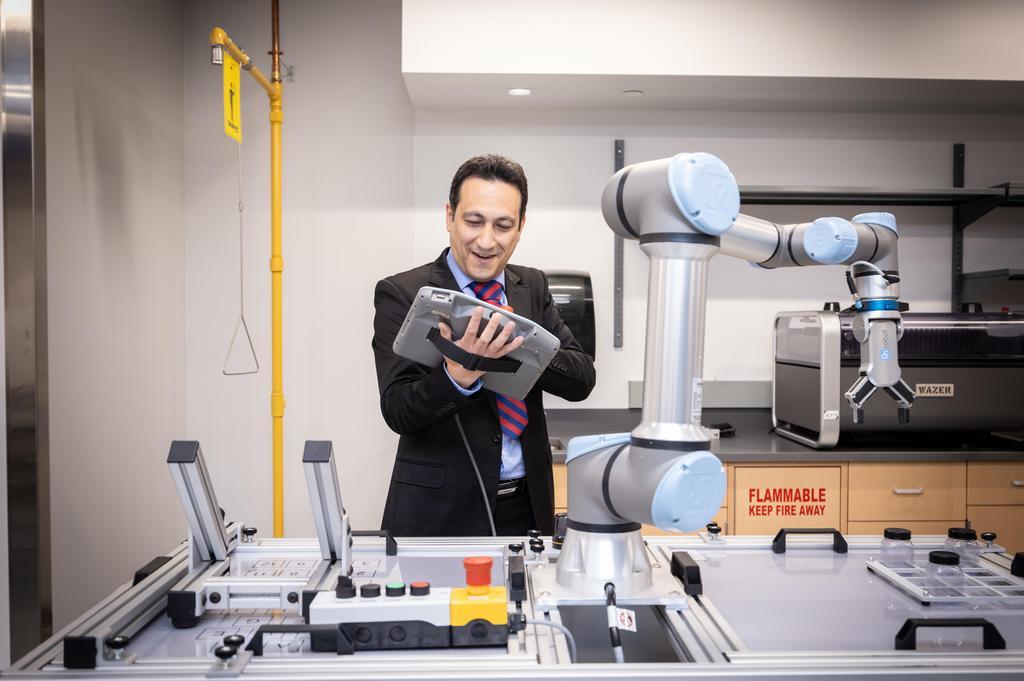
Assistant Professor of Mechanical Engineering Dr. Amin Ghorbanpour has been selected for the NASA Glenn Faculty Fellowship Program at NASA Glenn Research Center, where he will spend the summer conducting advanced research in aerospace propulsion systems—an opportunity that will directly expand research and learning opportunities for students in Duquesne University’s School of Science and Engineering.
The highly competitive 10-week fellowship brings faculty from across the country to NASA Glenn to collaborate with leading researchers on mission-driven engineering challenges. Fellows contribute to cutting-edge projects while building partnerships that strengthen STEM education and research at their home institutions.
For Ghorbanpour, the fellowship represents more than a summer research opportunity—it is a chance to bring NASA-level research directly into Duquesne classrooms, laboratories and student research experiences.
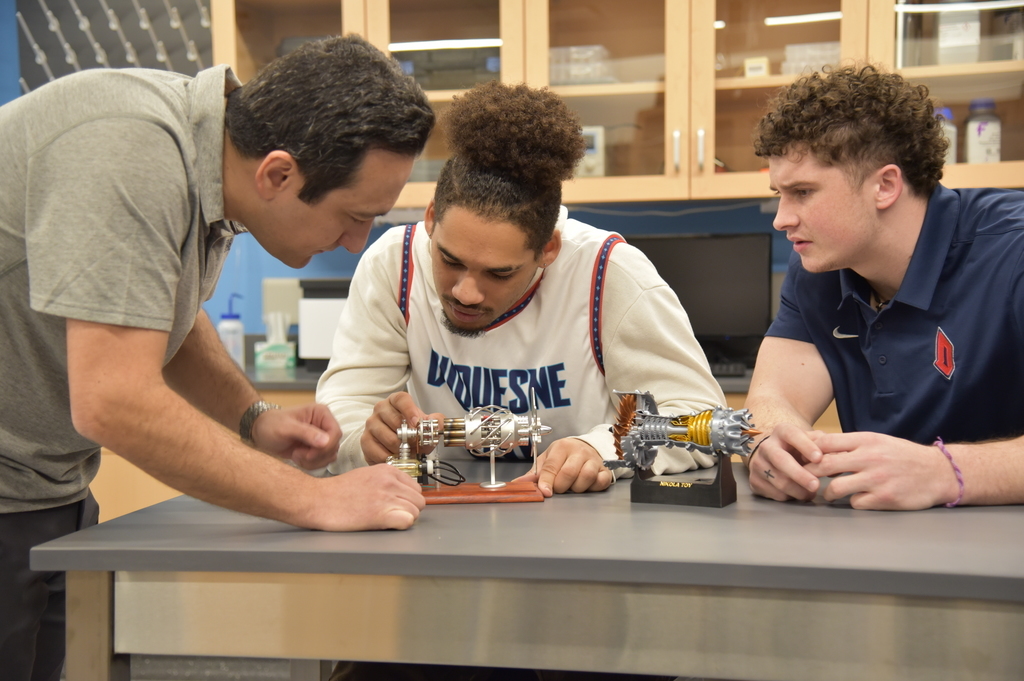
During the fellowship, Ghorbanpour will work within NASA Glenn’s Intelligent Control and Autonomy Branch on a project titled Energy Optimal Control Strategies for Hybrid Electric Aircraft Engines.
The research focuses on electrified aircraft propulsion systems, an emerging technology designed to improve fuel efficiency, reduce emissions and decrease aircraft noise. These advanced systems combine traditional jet engine technologies with electric machines and energy storage, creating complex engineering challenges that require sophisticated control strategies.
Ghorbanpour’s research will explore how optimal control methods can better manage fuel and electrical energy during aircraft operation, particularly during engine disturbances or rapid performance changes.
“Fundamentally, my work focuses on minimizing energy consumption in aircraft engines,” he said. “Improving system efficiency leads to lower fuel use and reduced emissions.”
While the research supports the future of sustainable aviation, Ghorbanpour says one of the fellowship’s most exciting outcomes will be the impact it can have on students.
“Opportunities like this expose students to cutting-edge research and emerging technologies being developed at organizations like NASA. They also connect classroom learning with real-world engineering applications.”
When Ghorbanpour returns to campus, students will gain exposure to the same types of engineering problems being explored at one of the nation’s leading aerospace research centers. He plans to incorporate fellowship experiences directly into coursework, laboratory activities and future student research projects.
“I plan to integrate what I learn during the fellowship into courses and laboratory activities,” he said. “Students will have opportunities to work on problems inspired by real aerospace applications.”
The experience also has the potential to create new pathways for Duquesne students interested in aerospace engineering, sustainable energy systems and advanced control technologies. Ghorbanpour hopes the collaboration with NASA Glenn will lead to future internships, research partnerships and professional connections for students exploring careers in rapidly growing engineering fields.
“Collaboration between universities and organizations like NASA is extremely important because it connects education with real engineering challenges. These partnerships help prepare students with the technical and problem-solving skills needed for future careers.”
By bringing nationally relevant research into the classroom, Ghorbanpour aims to give students not only technical knowledge, but also hands-on experience solving the kinds of interdisciplinary challenges shaping the future of engineering.
He encourages students to embrace difficult problems and take advantage of opportunities to apply their knowledge in practical settings.
“Developing new technologies requires creativity and persistence,” he said. “I highly recommend that students take advantage of the hands-on learning opportunities at Duquesne University.”
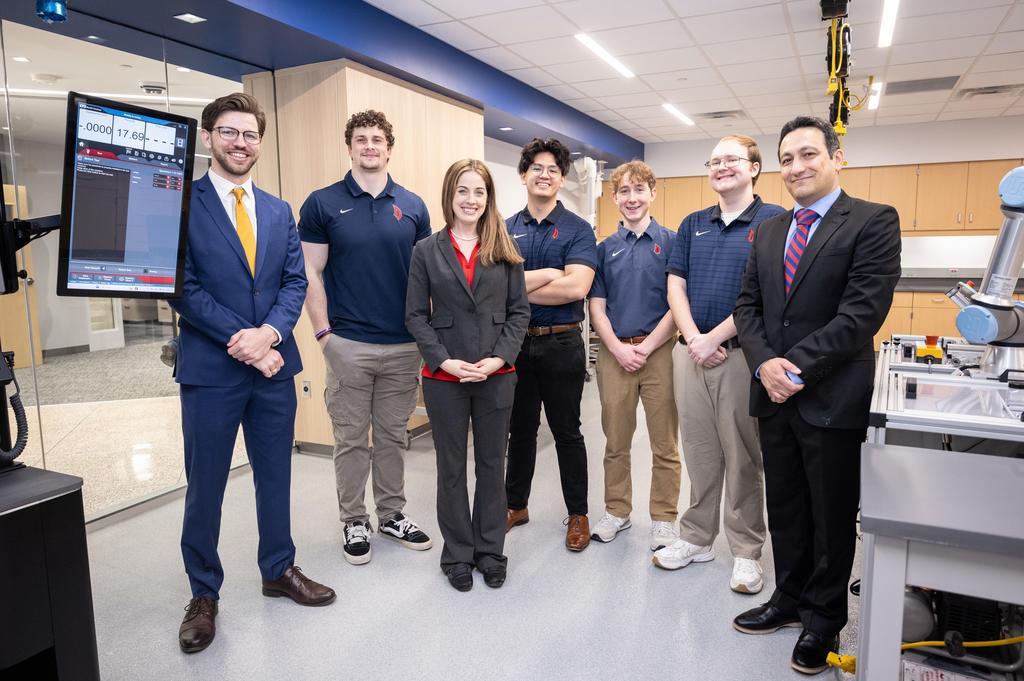
Ghorbanpour’s selection for the NASA Glenn Faculty Fellowship highlights Duquesne’s growing commitment to experiential learning, industry collaboration and research that prepares students to lead in emerging STEM fields.
Through this partnership with NASA, Duquesne students will gain greater access to cutting-edge ideas, real-world engineering applications and opportunities that extend far beyond the classroom.
News Information
Topics
Published
May 14, 2026