

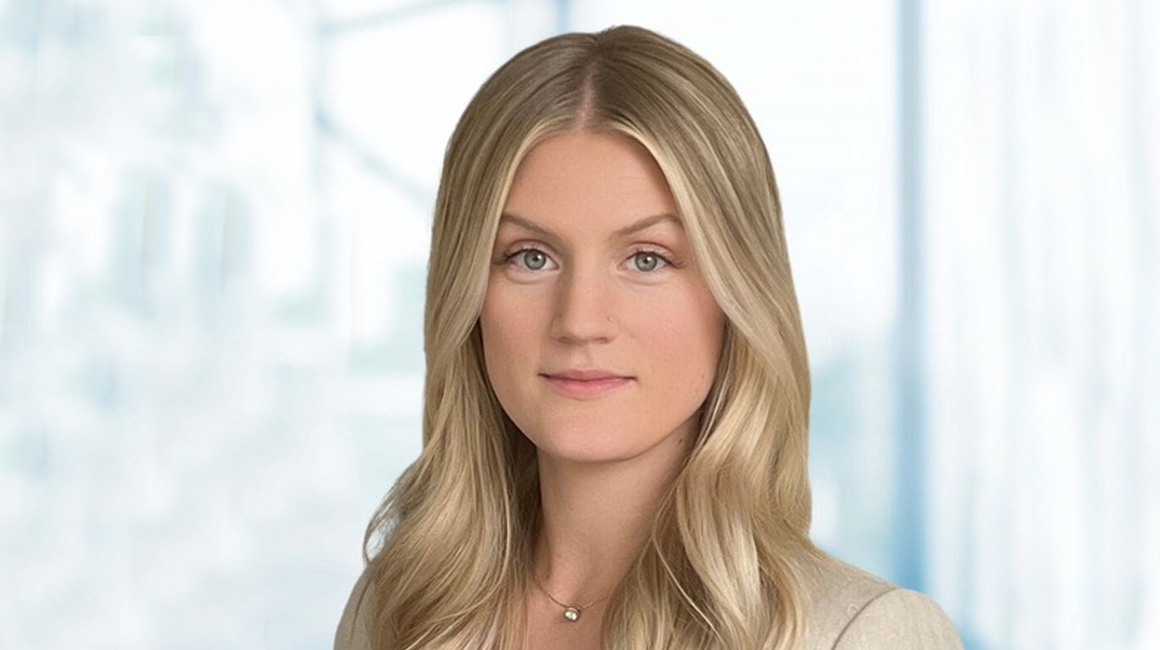
When Alanna Mecca transferred to Duquesne University, she was searching for a place that combined a strong science education with the opportunities of a vibrant city. She found both in Duquesne’s School of Science and Engineering—and discovered a career path she never expected.
Today, Alanna is an associate attorney, using the analytical skills, problem-solving mindset and commitment to advocacy she developed as an Environmental Science student (S'18) to navigate the legal profession.
Expanding Horizons Through Discovery
Alanna arrived at Duquesne knowing she was interested in science, particularly environmental science, but she had never considered a career in law.
“I was never the girl who grew up knowing she was going to be an attorney,” she said.
That began to change through a combination of academic experiences, mentorship and exploration beyond the classroom.
A study abroad experience in Tanzania became a pivotal moment. During the trip, conversations with faculty encouraged her to think differently about her future and explore how her interests in science, advocacy and public policy could intersect.
“My advisor was the first person who suggested looking into law school,” Alanna said. “Having Duquesne’s law school and law library right on campus started turning the gears for me about what was actually out there after graduation.”
As she explored environmental law and related career paths, she realized her science education had prepared her for much more than a traditional STEM career.
“The path kind of unfolded naturally,” she said. “One opportunity led to another, and Duquesne gave me the environment to explore all of those possibilities.”
Through a liberal arts education that combined rigorous science coursework with philosophy, theology and community engagement, Alanna learned to approach complex issues from multiple perspectives.
“I started taking intensive biology, chemistry and microbiology courses alongside deeply analytical courses in other disciplines,” she said. “The way those subjects pushed against each other really changed how I thought about everything.”
Learning Together
For Alanna, the relationships she built at Duquesne were just as influential as the coursework.
She credits numerous faculty and staff members with helping shape both her academic journey and professional aspirations.
Working in the School of Science and Engineering Dean’s Office allowed her to collaborate closely with faculty leaders who challenged her to grow.
“Dr. Philip Palmer was incredibly influential. He always pushed me to do better and expected more from me than I expected from myself.”
She also points to Environmental Science Professor Dr. John Stolz, whose enthusiasm for environmental education inspired her commitment to the field.
Beyond the classroom, involvement with Evergreen and the Community Engaged Scholars program helped her discover a passion for advocacy and community engagement.
Under the mentorship of Luci-Jo DiMaggio, Alanna developed leadership skills while working on sustainability initiatives and community-centered projects that addressed real-world challenges.
“Luci-Jo taught me not to take everything so seriously and showed me that even ambitious ideas can become reality,” Alanna said. “She encouraged me to pursue leadership opportunities that completely changed how I viewed community engagement.”
The friendships she formed also played a significant role in her development.
“You don't always realize the impact people have on you until you look back,” she said. “My classmates and peers helped shape who I became both personally and professionally.”
Prepared for Anything
Although law school may seem like an unconventional next step for an Environmental Science graduate, Alanna quickly discovered that her STEM background provided a significant advantage.
“Problem-solving is the biggest skill I carried with me. STEM teaches you how to work through complex challenges in a way that translates directly into legal reasoning.”
The analytical mindset developed through science courses prepared her to evaluate evidence, navigate ambiguity and build logical arguments—skills she now relies on daily as an attorney.
“Walking into law school with a Bachelor of Science gave me a different intellectual toolkit,” she said. “You learn how to sit with complexity, work through problems methodically and build conclusions from facts. Those skills translate directly into the legal field.”
Her science background also opened doors to legal specialties where technical knowledge provides a distinct advantage, including environmental law, pharmaceutical litigation, products liability and patent law.
“A science background isn't a detour from law,” she said. “It's an advantage.”
Alanna also credits the rigor of Duquesne’s School of Science and Engineering with preparing her for the demands of law school.
“The expectations faculty held us to at the undergraduate level prepared me well for the academic intensity of legal education,” she said.
Opportunity Begins with Exploration
Throughout her time at Duquesne, Alanna embraced opportunities across campus rather than limiting herself to a single path.
She participated in research and coursework while also engaging in student leadership, sustainability initiatives, study abroad experiences and community advocacy programs.
Looking back, she believes that breadth of experience became one of her greatest strengths.
“It wasn't one program or one opportunity that opened doors,” she said. “It was the combination of all of them.”
Her involvement with Evergreen remains one of the accomplishments she is most proud of. As a student leader, she helped launch initiatives focused on sustainability and environmental stewardship, including the community-driven Waste is Wack program.
“We worked with local government, community organizers and neighborhood partners to build something that extended beyond campus,” she said. “It became something with a lasting impact.”
Those experiences reinforced a lesson she continues to carry with her today: meaningful growth often happens outside of your comfort zone.
“Show up for things outside your major. Stay curious. Talk to people. Follow up,” she said. “The more experiences you have, the more prepared you'll be for whatever comes next.”
A Foundation for the Future
Today, Alanna's career reflects the power of a Duquesne education that encourages students to think broadly, engage deeply and pursue opportunities wherever they lead.
She sees Duquesne as a place that provided not only academic preparation, but also the confidence to explore paths that weren't always obvious.
“Duquesne gave me the space to pursue what interested me and follow wherever that led.”
For students considering law school—or any career that combines STEM knowledge with advocacy and problem-solving—Alanna offers this advice:
“Don't limit yourself to what is directly in front of you,” she said. “Stay curious, seek out experiences and don't be afraid to open doors that weren't part of your original plan.”
For Alanna, an Environmental Science degree became the foundation for a legal career dedicated to solving problems, serving others and creating meaningful change—proof that a Duquesne education prepares students not just for a profession, but for possibilities they may never have imagined.
News Information