

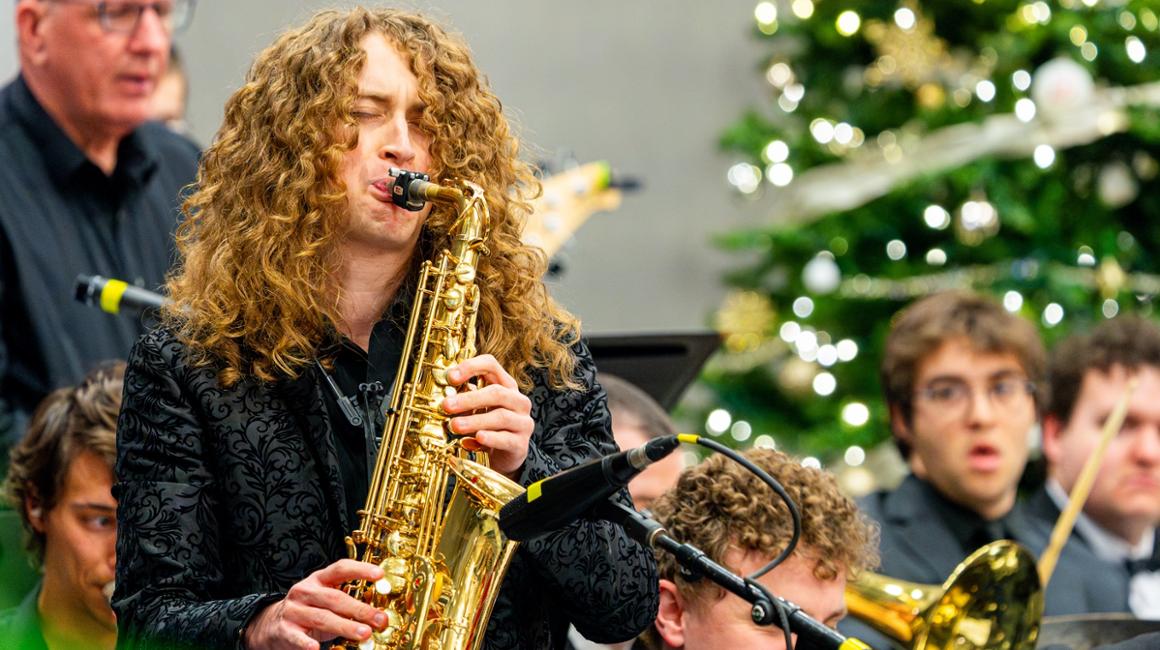
Jazz improvisation and particle physics rarely share the same spotlight, but at Duquesne University, Gabriel Pecar has spent five years mastering both.
That uncommon pairing defines Gabe’s undergraduate experience. The 23‑year‑old from Cadiz, Ohio, is graduating with two bachelor’s degrees—one in physics from the School of Science and Engineering and one in music from the Mary Pappert School of Music—a rare and demanding academic path that reflects both intellectual range and discipline.
Two Degrees, One Curiosity
Gabe first considered Duquesne after hearing strong recommendations from alumni about its physics and music programs. When he visited campus for the first time—struck by the open, green spaces—he knew it was the right fit.
“I remember being shocked at how much greenery there was on campus for a school so close to downtown Pittsburgh,” he said. “It immediately felt like a place where you could think.”
Learning Without Silos
That sense of openness carried into the classroom. At Duquesne, Gabe found an academic
environment without silos, where close faculty mentorship and accessible research
opportunities made it possible to pursue two very different disciplines at a high
level.
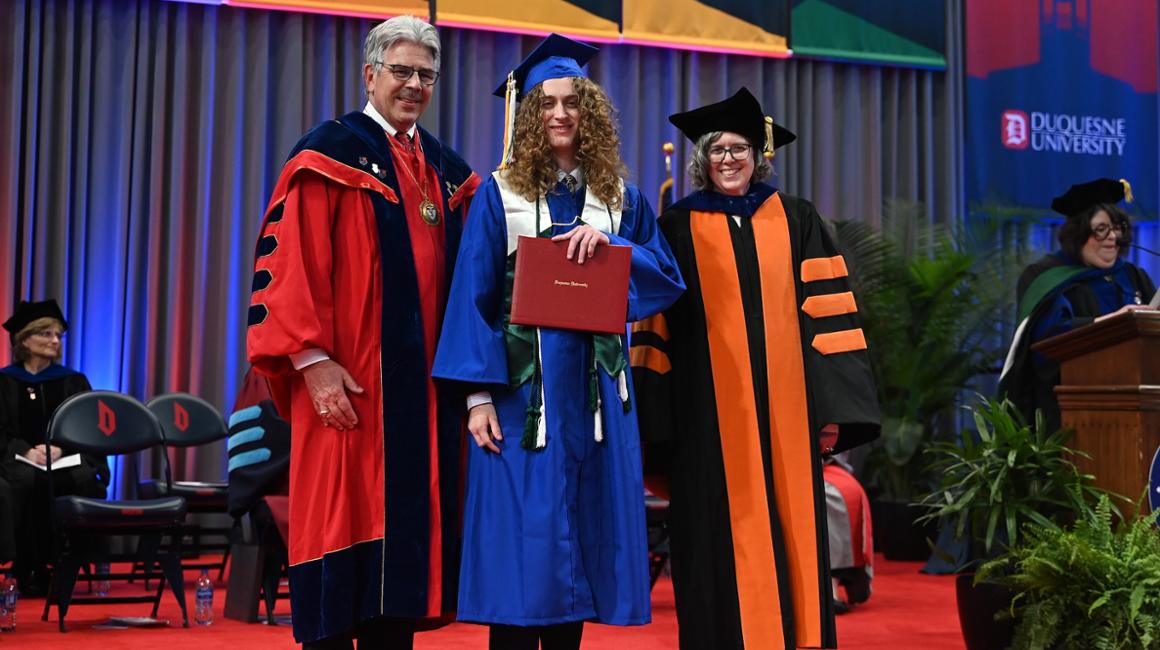
While studying physics and music simultaneously required more time and focus than he initially anticipated, it also reshaped Gabe’s approach to learning.
“Doing two things that are so different drives you to understand each subject on its own terms,” he said. “That skill has been incredibly valuable.”
Depth Through Practice
In physics, Gabe participated in summer research internships and worked closely with faculty mentors—like Associate Professor Dr. Fatiha Benmokhtar, who introduced him to particle physics, helped create opportunities to attend conferences and deepened his understanding of scientific research.
In music, he immersed himself in jazz studies, private saxophone instruction and performance opportunities. Support from faculty like Jeff Bush, adjunct jazz trombone professor and Gabe’s director as a member of the Jazz Ensemble, helped with discovering the depth and nuance required to master the craft.
“Despite them not being closely connected in practice, I feel very passionate about
both fields, and that’s what led me to study them closely,” he said.
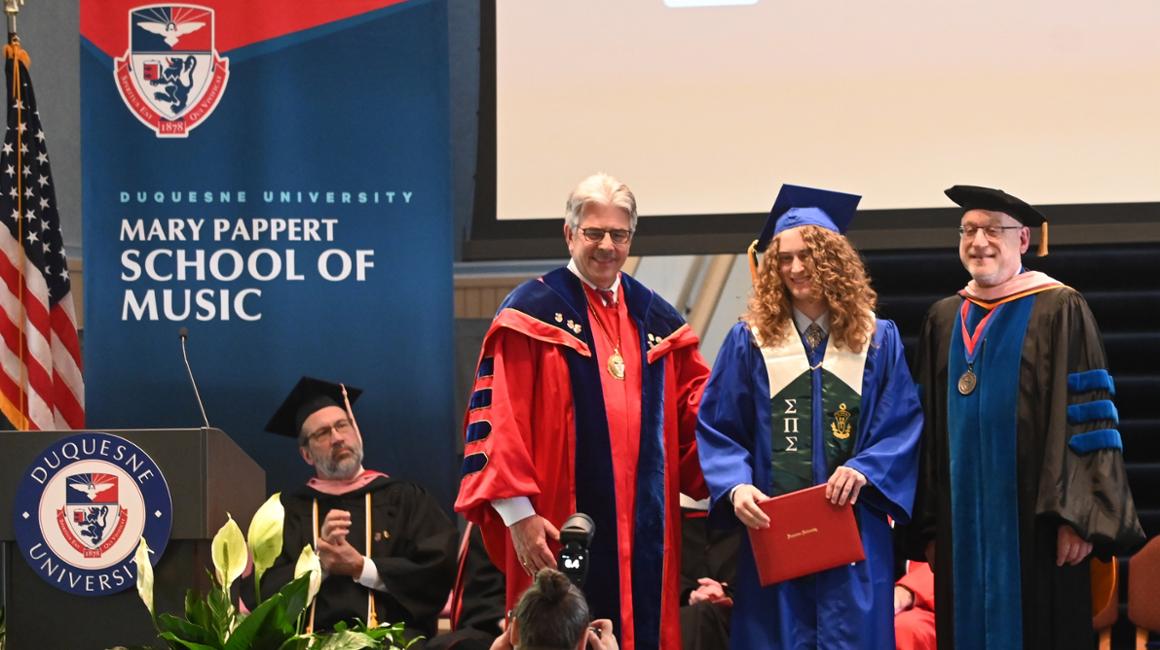
Gabe’s dedication was recently recognized when he received the Outstanding Student of the Year in the Bachelor of Arts program at the Mary Pappert School of Music, an honor that reflects both his musical growth and the discipline required to balance two demanding degrees. Additionally, Gabe’s academic achievements at the School of Science and Engineering earned him a Certificate of Excellence in Physics.
What Comes Next
Over time, Gabe’s demanding schedule and contrasting disciplines gave him something he didn’t expect: confidence in his ability to navigate complexity. “When I first arrived at Duquesne, I was still learning how to think deeply,” he said. “Now I understand just how much more there is to explore.”
That perspective will guide his next chapter. Gabe is headed to a highly competitive physics Ph.D. program at Carnegie Mellon University, where he plans to continue research while keeping music at the center of his life. The habits he developed at Duquesne—intellectual independence, disciplined curiosity and meaningful engagement with faculty mentors—have prepared him for the challenges ahead.
For Gabe, the most lasting impact of his Duquesne education goes beyond coursework or credentials. “Learning how to teach yourself something well is invaluable,” he said. “That applies to everything.”
In bringing together two vastly different fields, Gabe’s story captures what is possible when students are encouraged to think broadly, pursue what matters to them and grow into scholars prepared to lead with purpose.
News Information
Topics
Published
May 13, 2026