

Physician Assistant Studies
Become the PA you’re meant to be. At Duquesne, you’ll build the knowledge, clinical skills and confidence to become a compassionate and highly skilled physician assistant. Our five-year program combines a strong academic foundation with hands-on learning and extensive clinical experiences, supported by faculty committed to your success.
You’ll learn to think critically. Make confident clinical decisions and collaborate with other health professionals while building the skills to succeed in today’s healthcare environment. Along the way, experienced faculty will support you from the classroom and clinical experiences to the start of your career.
Our students are prepared to succeed. Duquesne PA graduates have achieved outstanding results on the Physician Assistant National Certifying Examination (PANCE), including a 100% first-time pass rate for both the Classes of 2024 and 2025. Our graduates go on to launch careers in a wide range of medical and surgical specialties and pursue competitive residency and fellowship opportunities.
When you graduate from Duquesne, you’ll be ready for more than your first job. You’ll be prepared to make a difference in the lives of your patients and the communities you serve.
Program Information
Ranked on the list of Best Graduate Schools for 2025 - 2026 by the US News & World Report. A top-rated Masters degree program with the first-ever five-year admissions requirement
Program Type
Major
Degree
Bachelor's, Master's
Academic Department
Physician Assistant Studies
Duration
5-year
Required Credit Hours
Pre-Professional Phase: 91 credits Accredited Phase: 89 credits
Modality
In-Person
More in this Program
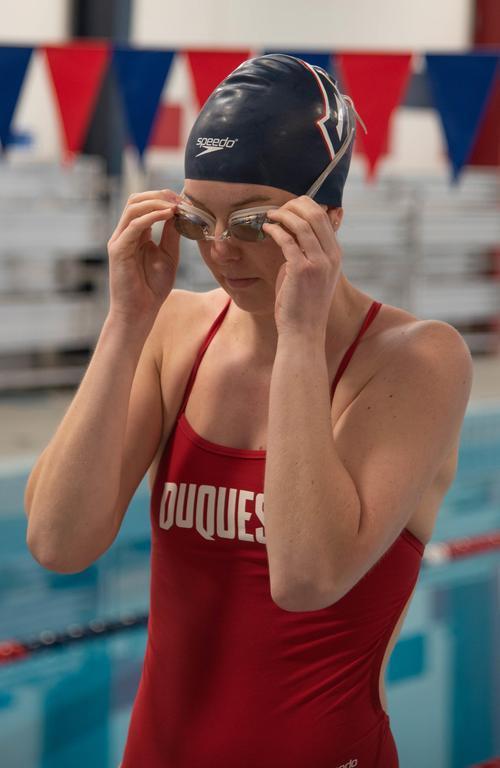
It's a tough balance to manage both athletics and academics successfully, but
I received a ton of support from everyone at Duquesne.
Students who complete the five-year curriculum earn both a Bachelor of Science in
Health Sciences degree and a Master of Physician Assistant Studies degree. The program
is completed in two phases. Pre-requisite courses throughout the three-year pre-professional
phase provide the strong science background necessary for academic success in the
accredited student phase. Once the pre-professional phase is completed, students advance
into the accredited phase of the program. Duquesne's first-of-its-kind five-year program prepares students with the skills,
experience and confidence to provide exceptional patient care—and we'll get you there
in just five years. Our five-year program gives you the education and experience you
need to share your gifts with the world sooner than later. Our graduates perform exceptionally on the Physician Assistant National Certification
Examination, and their clinical practice spans a variety of medical and surgical specialties.
Guided by highly qualified and experienced faculty, students receive top-notch instruction
in a state-of-the-art facility.Hear from Our Alumni
Why Choose Duquesne's Physician Assistant Program?
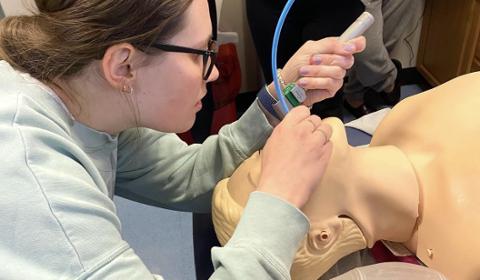
A Leading Model in PA Education
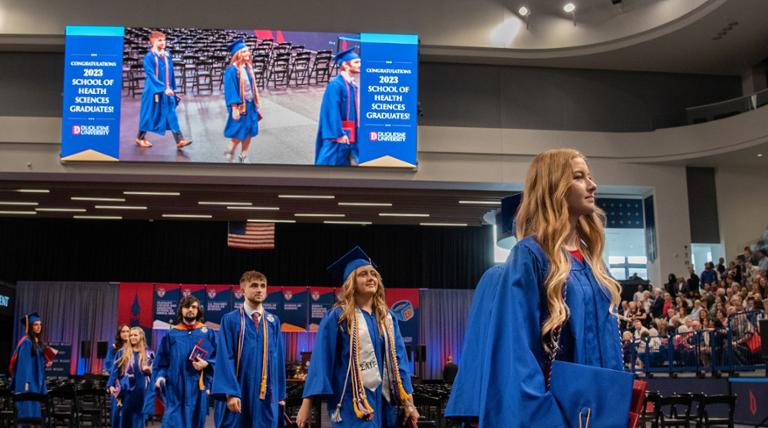
Preparing You For Anything
Curriculum
The pre-professional component consists of 91 credits of humanities, basic sciences and medical sciences. This educational component is completed in three academic calendar years. The accredited component is completed over 27 months, consisting of 89 credits, and is divided into two phases:
- Phase 1 is composed of 14 months of didactic and case-based courses in clinical and behavioral sciences, clinical laboratory science, and applied clinical skills.
- Phase 2 consists of 12 months of Supervised Clinical Practice, in which students participate in the evaluation and management of patients in a wide variety of clinical areas. Students also participate in case-based coursework, as well as complete an evidence-based medicine Master's project, suitable for publishing.
- BRDG 103 IPE Health Research Skills (1 credit)
- BRDG 101 Writing & Analysis (3 credits)
- BIOL 111/111L Biology I: Cells, Genetics, Dev/Lab (4 credits)
- CHEM 131/131L Fundamentals of Chemistry I/Lab (5 credits)
- BRDG 105 Intro to Ethical Reasoning (3 credits)
- COSC 100 Elements of Computer Science (2 credits)
- PHYA 101 Preparing for Clinical Practice (1 credit)
- BRDG 102 Writing & Literature (3 credits)
- BIOL 112/112L Biology II: Diversity, Eco, Evo/Lab (4 credits)
- CHEM 132/132L Fundamentals of Chemistry II/Lab (5 credits)
- BIOL 205/L Clinical Microbiology/Lab (3/1 credits)
- HLTS 200 Disparities in Healthcare (3 credits)
- PHYS 201/L/R Physics for Life Sci I/Lab/Rec (3/1 credits)
- PSYC 101 Introduction to Psychology (3 credits)
- PHIL/THEO Health Care Ethics (3 credits)
- EQ Essential Questions Seminar (3 credits)
- Cultural Fluency competency (3 credits)
- PHIL/THEO elective (3 credits)
- Health Science elective (3 credits)
- MATH 225 Introduction to Biostatistics (3 credits)
- COMM 203W Communication & Professional Civility (3 credits)
- HLTS 320/L Anatomy I/Lab (4 credits)
- HLTS 330 Physiology I (3 credits)
- HLTS 335 Histology (1 credit)
- HLTS 441 Medical Sciences I (3 credits)
- PSYC 251 Psychological Disorders Applied (3 credits)
- HLTS 321/L Anatomy II/Lab (4 credits)
- HLTS 331 Physiology II (4 credits)
- HLTS 442 Medical Sciences II (3 credits)
- PHYA 403W History & Physical Examination I (3 credits)
- PHYA 403L History & Physical Examination Lab (0 credits)
- PHYA 404 Clinical Lab Methods (3 credits)
- PHYA 414 Pathophysiology I (3 credits)
- PHYA 416 Intro to Patient Counseling & Educ (1 credit)
- PHYA 423 Introduction to PA Profession (2 credits)
- PHYA 424 Intro to Concepts in Pharmacology (1 credit)
- PHYA 401/L Clinical Medicine I / Lab (3 credits)
- PHYA 409 Clinical Pharmacology (4 credits)
- PHYA 410/L Applied Clinical Methods I / Lab (3 credits)
- PHYA 412W/L History & Physical Examination II / Lab (3 credits)
- PHYA 417 Pathophysiology II (3 credits)
- PHYA 422 Seminar in Diagnostic Test Interpretation (1 credit)
- PHYA 402L Clinical Medicine II / Lab (3 credits)
- PHYA 405 Clinical Encounters (0 credits)
- PHYA 408 Clinical Seminar I (3 credits)
- PHYA 411/L Applied Clinical Methods II / Lab (3 credits)
- PHYA 418/L Fundamentals of Pediatrics / Lab (2 credits)
- PHYA 421W/L History & Physical Examination III / Lab (3 credits)
- PHYA 425 Health Policy (2 credits)
- HLTS 430 Principles of Research (2 credits)
- PHYA 505 Clinical Seminar II (3 credits)
- PHYA 515/L Fundamentals of Surgery / Lab (3 credits)
- PHYA 520/L Clinical Medicine III / Lab (3 credits)
- PHYA 545 Applied Pharmacology (2 credits)
- PHYA 506 Clinical Seminar III (3 credits)
- PHYA 529 Clinical Externship I (Emergency Medicine) (3 credits)
- PHYA 530 Clinical Externship II (Behavioral Health) (3 credits)
- PHYA 531 Clinical Externship III (General Surgery) (3 credits)
- PHYA 513 Essentials in Clinical Practice (0 credits)
- PHYA 532 Clinical Externship IV (Pediatric) (3 credits)
- PHYA 533 Clinical Externship V (Primary Care - Family Medicine) (3 credits)
- PHYA 534 Clinical Externship VI (Primary Care - Internal Medicine I) (3 credits)
- PHYA 535 Clinical Externship VII (Primary Care Internal Medicine II Specialty/Women's Health) (3 credits)
- PHYA 536 Clinical Externship VIII (Elective) (3 credits)
- PHYA 540W Master's Independent Research / Study (3 credits)
How to Apply
If you are a current high school student, please use the undergraduate application to apply.
Students apply as freshmen for the five-year, entry-level Master's program. Within five years, students earn both a Bachelor's and a Master's degree. The admissions criteria for these applicants are posted below. Because the admissions process is very competitive, students must have a solid academic record.
Here are some additional strategies to improve your chances of gaining admission:
- Advanced Science & Math Skills: Applicants should demonstrate academic success with high-level science and math courses.
- Leadership Skills: Demonstration of leadership in school or community organizations is a benefit and strengthens your application.
- Demonstration of knowledge of the PA Profession: Applicants should understand the profession. While observing a PA in clinical practice is a great way to gain that understanding, not all prospective students may have that opportunity. Additional ways to understand the profession are to read about the career and visit the American Academy of Physician Assistants website and your local state society of physician assistants. Unlike many other PA programs, we do NOT require prospective students to shadow a PA.
Students must enroll in the program as freshmen. Admission to the Physician Assistant program at the freshmen level requires the following:
- a minimum Q.P.A. of at least 3.0 (admitted first-year students usually have a GPA much higher than the minimum)
- a composite math and verbal SAT score of at least 1,170; or a composite ACT score of at least 24. Please be advised that we are test-optional for the current application cycle
- a minimum of seven units of math and science
evidence of extracurricular activities and leadership during high school included on an additional list and resume - submission of two (2) letters of recommendation
- submission of a personal essay including a statement about yourself, why you would
like to become a physician assistant, and why you chose Duquesne University. Essays
submitted directly to the Office of Admissions should be in either a Word document
or PDF format.
** An essay submitted from the Common App, or any other application system, will NOT meet this requirement. **
It is recommended that students begin shadowing/observing a physician assistant while in high school to become more familiar with the profession. Students who meet all academic and program requirements during the pre-professional phase will be guaranteed admittance into the accredited phase.
- Academic credit is not awarded for prior education or work experience.
- Advanced Placement (AP) credit for science courses is not accepted for the Physician Assistant program.
- Advanced placement is not considered.
The application deadline for first-year students is November 15. Applications will not be accepted after that date.
Due to capacity constraints, we are not accepting transfer or second-degree applications to the PA program. Any student with more than 12 post-secondary credits is considered a transfer student.
All RSHS students will be expected to have abilities in five categories: observation, communication, motor, intellectual, and social. These abilities enable the student to perform tasks required to meet graduation and professional requirements as measured by state and national certification, licensure, and registration processes.
Cost of Attendance
Duquesne University is more affordable than you might think. Don't just take our word for it. Independent sources - including U.S. News and World Report and Washington Monthly - all rank Duquesne as a Best Value university.
- 99% of freshmen receive some form of financial assistance. We invest $79.5 million in our undergraduate students each year through University-based scholarships and total aid from all sources exceeds $195 million.
- $27,500: The average gift aid offer for first-time, full-time undergraduate Duquesne students who file a FAFSA. This is awarded for the first 4 years of the program, excluding the summer of the 3rd year and graduate coursework.
- All students are automatically considered for academic scholarships. Students are encouraged to explore and apply for other Duquesne scholarship opportunities.
- You will get solid career preparation, real-world skills, and a foundation of ethics that will make you stand out. An investment in a Duquesne education pays dividends over a lifetime.
| Student Status | Cost | Duration | Total Cost |
|---|---|---|---|
| Undergraduate (Fall & Spring semesters, years 1-4) | $61,152/year | 4 years | $244,608 |
| Undergraduate (Summer after year 3) | $1,956/credit | 13 credits | $25,428 |
| Graduate (Summer after year 4 to graduation) | $1,976/credit | 41 credits | $81,016 |
| Student Status | Cost | Tuition Total: | $351,052 |
Note: We recognize the cost of an education at Duquesne University; however, there are
other anticipated expenses in your education. These have all been deemed integral
to your professional development. With advance notice, you can plan and budget for
these additional expenses. FAQs about the Physician Assistant Studies Program Students may also voluntarily choose to join PA professional organizations, including
the PSPA and AAPA. Student membership in these professional organizations provides
many advantages, including educational conferences, networking, and scholarship opportunities.
Professional liability insurance for students during the accredited phase of their
education is provided by Duquesne University at no additional cost.Additional Expenses
Criminal History Check - current cost $25.75 (Subject to change)
Services - Physical Exam - $50.00, 2-Step PPD - $40.00, and Annual PPD - $20.00, Quantiferon
Gold Blood Test- $60.00. They do not provide flu shots.
Frequently Asked Questions
These expenses, such as medical equipment and white lab coats, are integral to the
student's professional development.
Learning Outcomes
Program Core Competencies
Professional competencies for physician assistants include the effective and appropriate application of medical knowledge, interpersonal and communication skills, patient care, professionalism, practice-based learning and improvement, and systems-based practice. The mission of the PA department is to prepare physician assistant students to become highly competent and qualified physician assistants who practice collaboratively in a professional and inclusive manner. Upon completion of the Duquesne University PA Program, each student will meet the following Learning Outcomes and Core Competencies.
- Students will perform an accurate, problem-focused and/or comprehensive history and physical examination in patients of ages across the lifespan.
- Students will be able to communicate with patients, patients' families and other members of the healthcare team in a supportive and effective manner.
- Students will document relevant patient data using various formats including written, oral and electronic modalities while being mindful of legal ramifications and overall patient safety.
- Students will be able to order and interpret pertinent diagnostic studies to develop an appropriate, prioritized differential diagnosis.
- Students will accurately integrate medical knowledge to implement treatment plans in order to comprehensively manage both medical and surgical patients.
- Students will competently perform both diagnostic and therapeutic procedures across the lifespan in various disciplines of medicine.
- Students will compassionately provide education and counseling while serving as a patient advocate.
- Students will maintain an understanding and respect for the patients' culture and provide inclusive care for all patients.
- Students will work collaboratively with all members of the healthcare team to provide safe and exceptional patient care.
- Students will engage in ethical and professional behavior with the patient, patient families and other members of the healthcare team.
- Students will analyze and interpret current, evidence-based medical literature and contribute via scholarly work to benefit the profession and society as a whole.
- Students will develop the skills necessary to become lifelong learners and demonstrate commitment to stay current with medical knowledge.
- Students will participate in scholarly activities to further the profession and provide service to the communities at large.
The faculty of the Duquesne University Physician Assistant Studies Program possess
clinical expertise in a variety of specialties and subspecialties, including internal
medicine and family practice, women's health, surgery, orthopedics, urgent care, infectious
disease, oncology, hematology, physical medicine and rehabilitation, HIV/AIDS, transplant
medicine, and pediatrics.
With many years of experience educating PA students and other healthcare professionals,
the faculty serves as mentors and resources for students throughout their college
careers. They work closely with students to ensure the development of their professional
skills to the highest level. Department Chair and Assistant Professor Assistant Professor Instructor Director of Clinical Education Medical Director Assistant Professor Assistant Professor Assistant Professor Assistant Professor Adjunct Faculty Adjunct Faculty The Accreditation Review Commission on Education for the Physician Assistant, Inc.
(ARC-PA) has granted Accreditation-Continued status to the Duquesne University Physician
Assistant Program sponsored by Duquesne University. Accreditation-Continued is an
accreditation status granted when a currently accredited program is in compliance
with the ARC-PA Standard You can learn more about what physician assistants do by visiting these websites.
Our Faculty

Kristin D'Acunto, Ed.D, MPA, PA-C

Nicole Brown, MS, PA-C

Christy Dom, MPAS, PA-C

Courtney Hartman, MHPE, MPAS, PA-C

Timothy L. Jackson, M.D., F.A.C.P.

Kristyn Lowery, MPA, PA-C
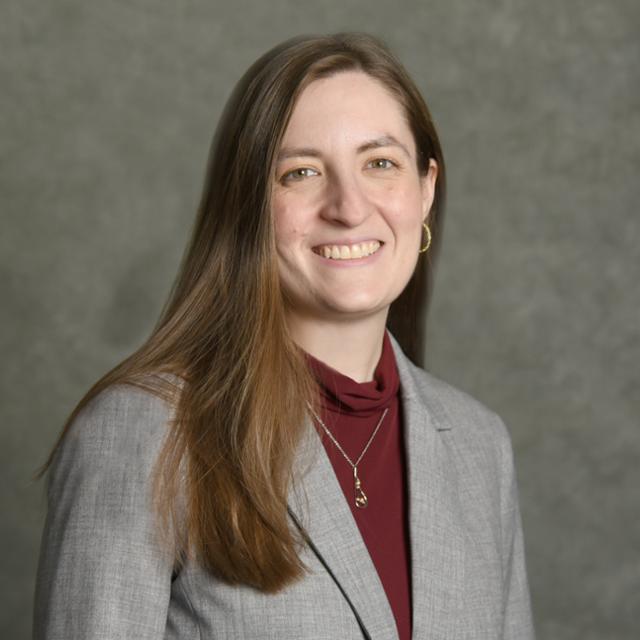
Marie Matarazzo, DMS, MPAS, PA-C

Allison Morgan, MPA, PA-C
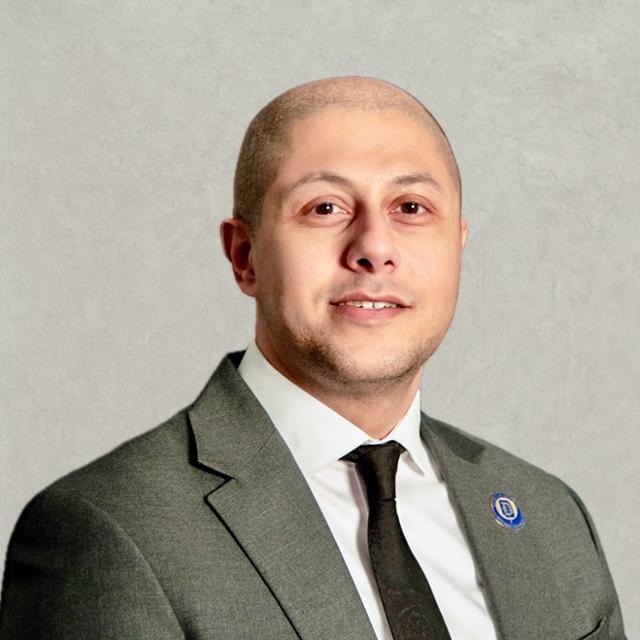
Bahaa Shaaban, MD, MCh, MS, MA

Jenifer Blasinsky, Pharm.D.
Charles Karnack, Pharm.D.
The Accreditation Review Commission on Education for the Physician Assistant
Accreditation remains in effect until the program closes or withdraws from the accreditation
process or until accreditation is withdrawn for failure to comply with the Standards.
The approximate date for the next validation review of the program by the ARC-PA will
be September 2032. The review date is contingent upon continued compliance with the
Accreditation Standards and ARC-PA policy.
The program's accreditation history can be viewed on the ARC-PA.Accreditation
Contact us!
Terri Critchfield

Kim Regal